
Poster Flash Talks

San Diego Summit Poster Flash Talks


The Poster Flash Talks provide attendees with an opportunity to discuss new research, programs, and other current issues with presenters who have created visual poster displays. Each presenter will provide a short 5 to 7-minute presentation followed by Q&A.

Poster Flash Talk sessions will be on Friday, September 25th from 4:30 PM to 5:30 PM at the Hyatt Regency La Jolla. All presenters will be in person.

Physical posters will be displayed at the Networking Reception on Friday, September 25th from 5:45 PM to 6:45 PM.

Continuing Education Credits are available for this year’s poster flash talks!

Congratulations to our San Diego 2026 Poster Award Winners!

Poster #52 Supporting the Supporters: Coping, Self-Care, and Reflexivity Among Qualitative Researchers Working with Intimate Partner Violence Survivors - Donna Meeker-O’Rourke

The Murray Strauss Award - This award acknowledges significant contribution of original research conducted on the integration of multiple forms of interpersonal violence or original research on interpersonal violence prevention or intervention.

Poster #5 Effects of ADHD Stigma on Guilt When a Child Sexual Assault Victim Has a Neurodevelopmental Disorder - Melissa Law

The Robbie Rossman Memorial Child Maltreatment Research Award - Recognizes outstanding student research that will be the future cornerstone in helping children exposed to family or sexual violence.

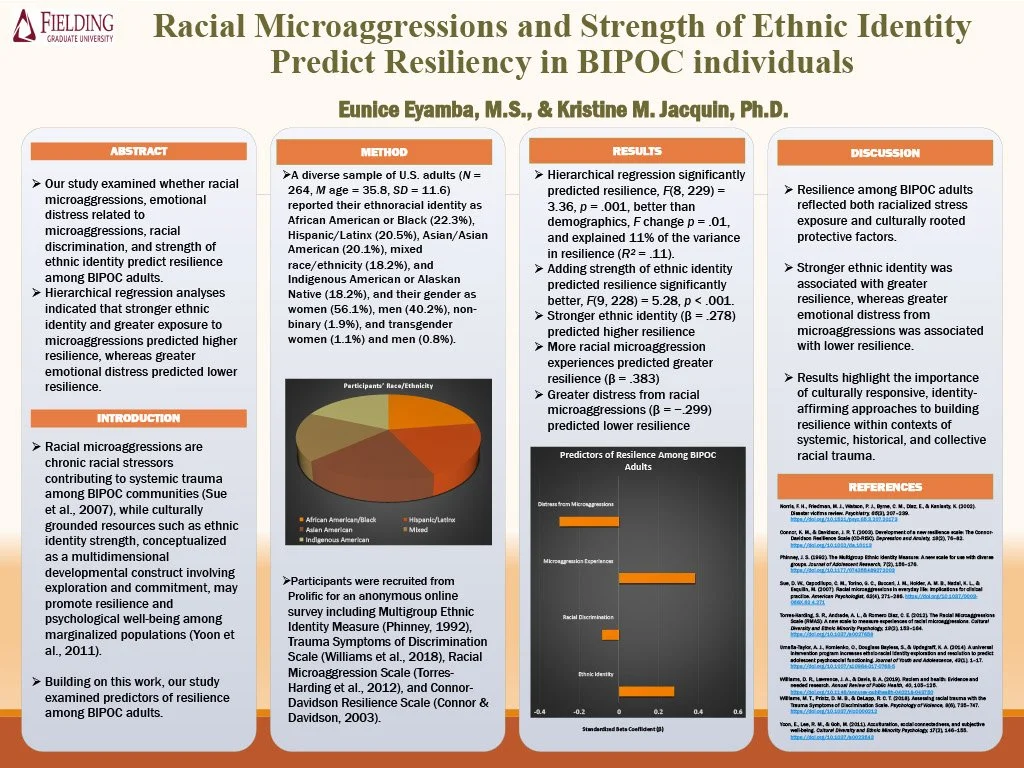
Poster #25 Racial Microaggressions and Strength of Ethnic Identity Predict Resiliency in BIPOC Individuals - Eunice Eyamba

The Founders Award - This poster represents the NPEIV Founders Award recognizing the poster presented at the IVAT conference that best exemplifies the goals of NPEIV to reduce, eliminate, or prevent violence through research, practice, policy, or advocacy. 
 

31st San Diego Poster Groups

Poster Group 1: Substance Use, Sexual Behavior, and Violence

  • 44 -Exploring Associations between Measures of Violence and Aggression and Alcohol-Related Behaviors in Individuals Seeking Treatment for Alcohol Use Disorders – Alam Roxey 

  • 9 - Adults with Avoidant Attachment Style Perpetrate More Sexual Aggression Than Securely Attached and Anxious Avoidant Adults – Ana Cerrato-Young 

  • 2 - Attachment, Schemas, Emotion Dysregulation, and Enhancement Sex Motives as Predictors of Sexual Aggression – Angelina Halpern 

  • 47 - Who holds stronger alcohol expectancies? The role of Sexual Victimization and Gender Identity – Michel Paige 

  • 10 - Using Personality Assessments to Predict Police Sexual Misconduct – Janelle Peters 

  • 4 - Sexual Victimization and Depression Predict Sexual Dysfunction in Women and Men –Jessica Simich 

  • 13 - The Impact of Early Exposure to Pornography on Adolescents with Sexually Abusive Behavior: Associations with Antisocial Behavior, Mental Health, Substance Use, Adjudication, and Trauma – Kathliene Sundt 

  • 3 - Somatization Moderates the Relationship Between Emotional Neglect and Sexual Dysfunction in Women but not Men – Monique Welch 


Poster Group 2: Culture and Identity in Trauma, Violence, and Healing

  • 25 - Racial Microaggressions and Strength of Ethnic Identity Predict Resiliency in BIPOC Individuals – Eunice Eyamba 

  • 45 - Survivors’ Perspectives of Psychotherapists' Responses to IPV and its Intersection with Culture and Identity: A Narrative Analysis – Mikayla Lisi 

  • 46 - The Aftermath of Molded Masculinity and Male Victimization – Diana Shields 

  • 40 - The Resistance is Greater: Understanding Resilience and Historical Trauma among Vietnamese Americans – My Ngoc To 

  • 37- Contemplative Practices for Healing Historical Trauma among BIPOC Populations: A Scoping Review – My Ngoc To 

  • 38 - Healing Vietnamese American Historical Trauma with the WEALTH Program: A Community-Based Contemplative Model - My Ngoc To 

  • 50 - Voices of Recovery: Muslim Women Survivors of Gender-Based Violence in Metro Detroit – Zeynep Zonp 

  • 14 - Gendered Racial Microaggression Experiences Predict Anxiety, Stress, and Depression in Asian American Women – Kaytee Younker 

  • 23 - Barriers to Leaving: How Concerns About Leaving Differ Across White, Mexican American, Korean American, and Vietnamese American IPV Survivors – Paloma Olmedo 


Poster Group 3: Systems, Services, and Responses to Violence and Trauma

  • 26 - Analysis and Experiences of Survivors of Trafficking within the Criminal Justice System: Challenges, Policies & Recommendations for More Supportive Systems – Kate Burba 

  • 28 - Rehabilitative and Punitive Attitudes in Correctional Facilities: Mental Health Professionals and Custody Staff Perceptions of Incarcerated Individuals – Kaitlyn Do 

  • 5 - Anxiety, Depression, and Stress Predict Racially Offensive Conduct in First Year Police Officers – Xaviera Gadpaille 

  • 34 - When Justice Feels Unsafe: Courtroom Protections for Domestic Violence Survivors – Rachel Gage 

  • 41 - Digital Interventions for Intimate Partner Violence Screening, Intervention, and Prevention: A Systematic Review – Ruby King, Lindsay Orchowski 

  • 52 - Supporting the Supporters: Coping, Self-Care, and Reflexivity Among Qualitative Researchers Working with Intimate Partner Violence Survivors – Donna Meeker-O'Rourke 

  • 58 - Professional Knowledge of Child Abuse Allegations in Divorce and Custody Disputes: Trends From 2019–2025 – Jessica Mueller-Coyne, Morgan Illercil, Bob Geffner 

  • 48 - TeleSANE Implementation in Rural Communities: Lessons for Advocates and SANE Providers – Alyssa Schramm, Claire Clifton, Monika Basyal 

  • 20 - Service Provider Perspectives on Working with Young Adult Women Affected by Sex Trafficking in Hawaiʻi: Needs, Challenges, and Paths Forward – Vanessa Simiola 

  • 57 - Beyond Recidivism: Institutional Betrayal and Trauma in the U.S. Carceral System – Rachel Christenson, Geovon Thomas, Nicole Gutierrez 


Poster Group 4: Trauma, Mental Health, and Risk Across Diverse Experiences

  • 43 - Intimate Partner Violence, Suicidality, and 2SLGBTQ+ Young Adults: A Narrative Review of the Literature – George Fazaa 

  • 49 - Housing and Food Insecurity and Intimate Partner Violence Perpetration among Low-Income, Mixed-Gender Couples – Yahli Harel 

  • 12 - Fit for Duty, Unfit for Care: The Role of Eating Disorders and Trauma in Military and Veteran Populations – Brittney Marono 

  • 27 - Novel Predictors of PTSD Symptom Severity in Women Following Adult Sexual Assault – Amy Nguyen 

  • 30 - Trauma Response Following Physical Injury: Examining Peritraumatic Distress and Demographic Vulnerability – Athena Tsai 

  • 35 - Associations Between Probable PTSD, MDD, Their Comorbidity, and Suicide Risk Among U.S. Service Members – Hayley Myers 

  • 51 - The Third Parent: How High-Demand Religion Conditions Vulnerability to Coercive Control – Kalena Crosby 

  • 8 - Exposure to Different Natural Hazard Traumas Predicts Eco- Anxiety – Chizara Ojukwu 


Poster Group 5: Pathways to Resilience, Recovery, and Growth

  • 19 - Resilience, Emotional Intelligence, and Verbal Reasoning Predict Posttraumatic Growth – Rosalyn Collins 

  • 29 - Posttraumatic Growth and Post-ecstatic Growth: A Comparison of Younger and Older Adults – Christina Dodd 

  • 56 - The Art of War and The Greatest War: The Self – Samantha Kalilikane, Jared Salvatore Alberico 

  • 60 - Survivors Create a Movement to End Sexual Violence – Timothy Lennon 

  • 16 - The Role of Creative Arts Therapies in Fostering Resilience Among Trauma-Exposed Youth: A Neurobiological Literature Review – Cassandra Stillman 

  • 54 - I’ve Got Your Six: Therapist Attributes that Foster Effective and Ethical Treatment Outcomes in Veterans with Complex Trauma and Combat-Related PTSD – Marisabel Torres 

  • 24 - From Exposure to Empowerment: Pathways to Healing for Adult Survivors of Childhood Exposure to Domestic Violence – Tysheira Wasner 

  • 33 - The efficacy of ketamine assisted psychotherapy when compared to ketamine treatment for Post Traumatic Stress Disorder – Nicholas Page 

  • 42 - Post-Traumatic Stress Disorders and the Coping Skills of Formerly Incarcerated Individuals – Alexandra Niebaum 

  • 31 - Divergent Paths, Shared Challenges: Identity Reconstruction and Reintegration After High-Commitment Group Exit – Ariana Barboa 

Poster group 6: Childhood, Youth, and Trauma

  • 22 – The Prevalence and Correlation of Adverse Childhood Experiences Among Adult Patients Attending Type V Psychiatry Clinics and a Hospital Outpatient Department in Kingston, Jamaica – Nicole Alleyne 

  • 53 - From Police Report to Healing: A Strength-Based, Multidisciplinary Response to Childhood Trauma – Skylar Bottcher, Navila Calvet 

  • 59 - Identifying the Impact of Racism and Racial Trauma – Kevin Connors 

  • 36 - The Roots Before the Wound: Intergenerational Trauma as the Hidden Driver of Domestic Violence Cycles and the Gap in Survivor Recovery – Monique Davis 

  • 39 - Exposure to war-related trauma and symptoms of complex PTSD among children and adolescents in Gaza – Rawan Iriqat 

  • 1 - Just Sit Tight, We’ll Fix It? How Systemically Sanctioned Emotional Invalidation Gift Wraps Violence Against Women and Girls – Chanelle Norman 

  • 32 - Youth as Tertiary Characters in Their Own Stories: The Construction or Erosion of Youth Autonomy in Sexual Assault Research – Ayla Brescia 

  • 6 - Effects of ADHD Stigma on Guilt When a Child Sexual Assault Victim Has a Neurodevelopmental Disorder – Melissa Law 

  • 17 - Discussing the Rising Suicide Rate Among Youth in the Black Community – Sheila Turner 

  • 15 - Training Needs and Competency Development for Clinical Social Workers Serving Infants and Young Children: A Qualitative Needs Assessment – Rosemary Beltran